
The Tides and the Walkers
The Salt PathTides shape the walkers’ daily choices and become a recurring image for loss, danger, return, and the changing boundary between security and exposure.
increasing Bearing strength in each event
 decreasing
Bearing strength in each eventdecreasingThe Sea Comes Too Close
The Sea Comes Too Close
A boundary that moves
The sea rises beyond the expected tideline and threatens the tent, forcing Ray and Moth to carry their shelter inland. A small stream that had seemed fresh becomes a route for incoming salt water.
The event teaches the couple that the coast is not a fixed boundary between safe land and dangerous sea. It is a changing force that can make a familiar campsite unsafe in minutes.
Water Sets the Schedule
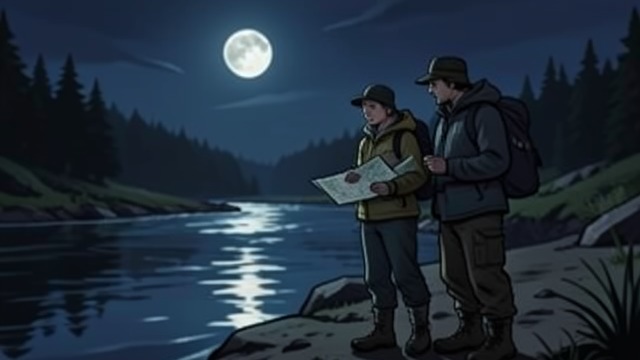
Water Sets the Schedule
Crossing depends on the tide
The walkers time ferries and river crossings around changing water levels. At Erme Mouth, they choose to cross thigh-deep water by moonlight rather than wait until morning.
Their movements are governed by tides as much as by the guidebook. The sea determines when a route opens and how much risk each choice carries.
An Estuary in Motion
An Estuary in Motion
Land and water depend on each other
Ray reflects on Chesil Beach and the Fleet Lagoon as a changing system in which freshwater, saltwater, shingle, and tide continually affect one another. Neither side exists in isolation.
The landscape offers a model for lives altered by loss and return. Stability is not the same as stillness; a lasting relationship may depend on movement and change.
A Tide Brings Them Back
A Tide Brings Them Back
The old route draws them west
The couple return to the coast after months inland and feel pulled back toward the sea. Their bodies and attention respond to the familiar tides, salt air, and open horizon.
The return resembles a tide carrying them back to a place of refuge. They arrive changed, carrying memories of the earlier journey and a different understanding of what they need.
The Sea as a Shared Present
The Sea as a Shared Present
Moving water holds the moment
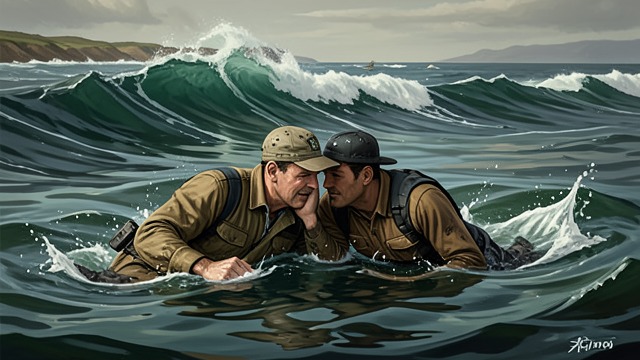
Ray and Moth swim, wash, and rest beside the sea during their final extended stay on the coast. Tides continue to rise and fall while they share a moment of renewed physical closeness.
The water cannot promise a safe future, but it lets the couple inhabit the present together. Its movement becomes a reminder that change need not erase connection.
During the first camp at Portheras Cove
During the first autumn along the estuaries
During the passage along Chesil Beach
During the return to South Haven Point
During the final stay beside the Channel
